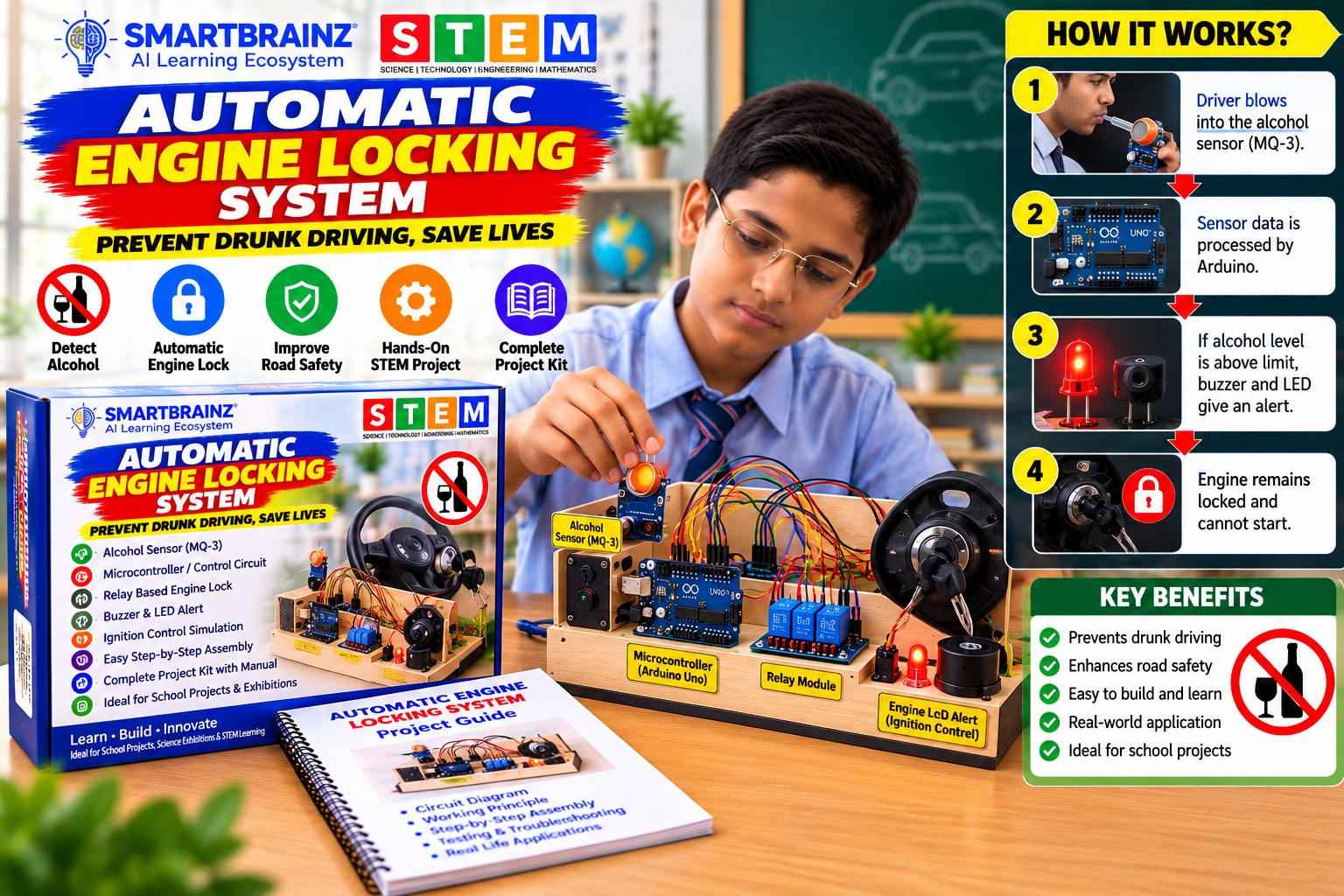
Automatic Engine Locking System
The Automatic Engine Locking System is a safety device designed to
prevent drunk driving incidents by detecting alcohol levels in the
driver’s breath and automatically locking the engine if alcohol is
detected.
Itfeatures components such as a Motor Driver, Buzzer, BO Gear Motor,
MQ-3 Alcohol Sensor, and a 9V Battery for efficient operation and
reliable performance.
Features
+ Utilizes a Motor Driverfor controlling the locking mechanism. Lesson Plan and
+ Includes a Buzzer for audible alerts and notifications. Activity includes
+ Features a BO GearMotorfor efficient engine locking.
+ Equipped with an MQ-3 Alcohol Sensor for accurate alcohol level
detection. Step-by-Step
+ Powered bya 9V Battery for portability and convenience. Instructions for
assembling of the
Components: project
+ MotorDriver Hands on training
+ Buzzer and exploration to
+ BOGearMotor students
+ MQ-3Alcohol Sensor
+ NBattery Group discussion and
Working Principle: brainstorming session
on the topic.
The MQ-3 Alcohol Sensor continuously monitors the alechol levels in
the vicinity. Question and Answer
Ifthe sensor detects alcohol in the driver’s breath above a predefined session
threshold, it sends a signal to the Motor Driver.
The Motor Driver then activates the BO Gear Motor to lock the engine, Debate/Quiz on the
preventing the vehicle from starting. topic
Simultaneously, the Buzzer emits audible alerts to notify the driver of
the engine locking. Observations &
‘Application: Analysis in real world
scenario
Enhances safety by preventing drunkdriving incidents.
Suitable for installation in vehicles, including cars, trucks, and other Assesments and
automobiles. recognition.
Ideal for use in fleet management systems to enforce responsible
driving practices. Soom
Can be implemented in public transportation vehicles to ensure J Ne
passengersafety. |
( PROJECTSKIT
| MRPRs.1499 /- |
) Only f
Nae
Lesson Plan and Activity Includes
- Step-by-Step Instructions for assembling of the project
- Hands on training and exploration to students
- Group discussion and brainstorming session on the topic.
- Question and Answer session
- Debate/Quiz on the topic
- Observations & Analysis in real world scenario
- Assessments and recognition.



Reviews
There are no reviews yet.